← DECT NR+ DECT NR+ evaluation kits · order online

DECT NR+ on Nordic Semiconductor hardware, ready to run.

We program Nordic Semiconductor Thingy:91 X, nRF9151 DK, nRF9151 SMA DK and nRF9131 EK boards with our own DECT NR+ stack and test them before they ship, so US developers can start on a working network instead of a bare board. Each kit carries FLSEMI’s full-function DECT NR+ firmware as an evaluation platform — not a cut-down demo, and not yet a certified stack. Kits are offered close to cost — what we are after is your DECT NR+ project, not a margin on hardware. Order online by card or PayPal; kits usually ship within two weeks. Currently available to customers in the United States only.
915 MHz & 1.9 GHz US$112 / US$111 / US$138 / US$72 per kit + US$12 shipping Order online · usually ships within two weeks US customers only Full-function FLSEMI firmware Evaluation kit for developers
Four kits

Pick the board that fits your bench.

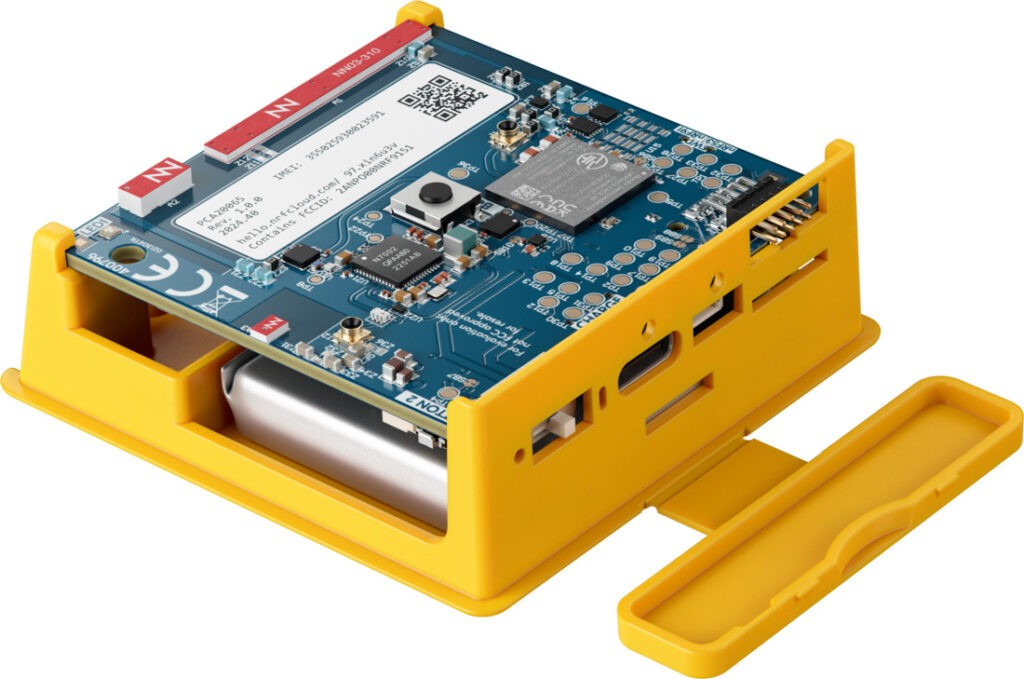
Nordic Semiconductor Thingy:91 X with its top cover removed, showing the board and battery
Battery-powered · enclosed

Thingy:91 X kit

A Nordic Semiconductor Thingy:91 X (nRF9151 + nRF5340). The nRF9151 runs FLSEMI’s DECT NR+ stack, and the nRF5340 runs FLSEMI’s BFi53USB7IP gateway firmware: it drives the DECT NR+ stack on the nRF9151 over an internal SPI link (nRF9151 as SPI slave, with an interrupt line to signal pending data), gives your PC USB serial ports for configuration, monitoring and firmware updates, and can forward data to the cloud over Wi-Fi.

You configure the kit yourself over USB serial, or over Bluetooth LE in a time-limited window — Wi-Fi credentials, cloud server and upload interval — no app or account needed.

Ships with no cloud connection. Point it at your own ThingsBoard server (CoAP device API); FLSEMI’s reference guide for the setup is provided with the kit.

The CoAP uplink is not encrypted by itself. The kit has a built-in WireGuard client, so you can carry the uplink through an encrypted tunnel to your own WireGuard server; without a tunnel, data is sent as plaintext CoAP.

Firmware updates for both chips (nRF5340 and nRF9151) over USB or Bluetooth LE — no debugger needed. A command shell is available over USB and over the Nordic UART Service.

  • Battery and enclosure included — take it around a building
  • Use it as a network node, or as the gateway to your PC or the cloud
  • Ships with group push-to-talk, one-to-one calls and group text messages, encrypted in the app; a PC/Mac reference app (Python) is on the downloads page — group voice & messaging

US$112 per kit + shippingUS$12 shipping per order within the United States. Order now →
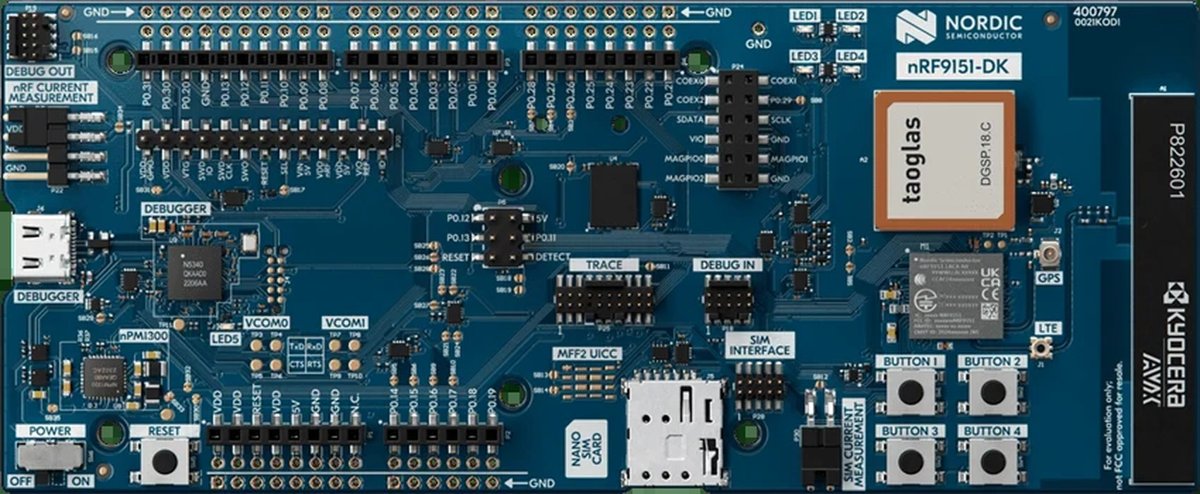
Nordic Semiconductor nRF9151 DK development board
Bench board

nRF9151 DK kit

A Nordic Semiconductor nRF9151 DK. The nRF9151 runs FLSEMI’s DECT NR+ stack; your PC drives the DECT NR+ stack through our UART host interface (HIF-UART) — a framed opcode protocol with CRC-16 integrity at 1 Mbaud over the board’s USB virtual serial port. That is the wired link to your PC or MCU, not the radio data rate.

  • Development-kit access to the nRF9151 for your own work
  • Drive the stack from a PC script or your own MCU

US$111 per kit + shippingUS$12 shipping per order within the United States. Order now →
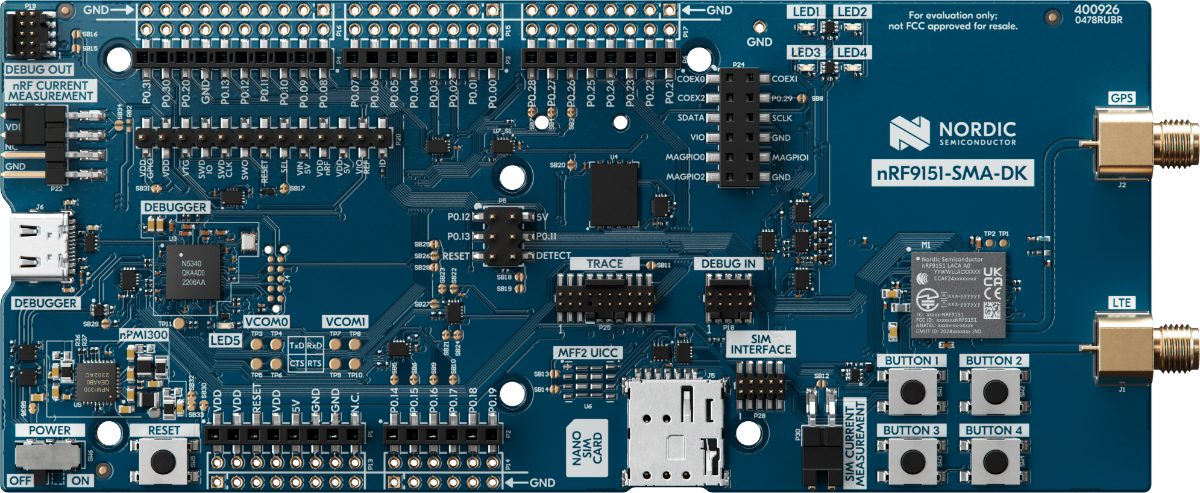
Nordic Semiconductor nRF9151 SMA DK development board with SMA antenna connectors
Bench board · SMA connectors

nRF9151 SMA DK kit

A Nordic Semiconductor nRF9151 SMA DK: the nRF9151 DK with SMA connectors in place of the on-board antennas. It runs the same FLSEMI firmware as the nRF9151 DK kit, and your PC or MCU drives the stack through our UART host interface (HIF-UART). The same board runs on FLSEMI’s bench network today.

  • Conducted measurements with lab equipment, or an external antenna of your choice
  • Fit an antenna suited to your band (Band 9 at 1.9 GHz or Band 4 at 915 MHz) to the SMA port before use

US$138 per kit + shippingUS$12 shipping per order within the United States. Order now →
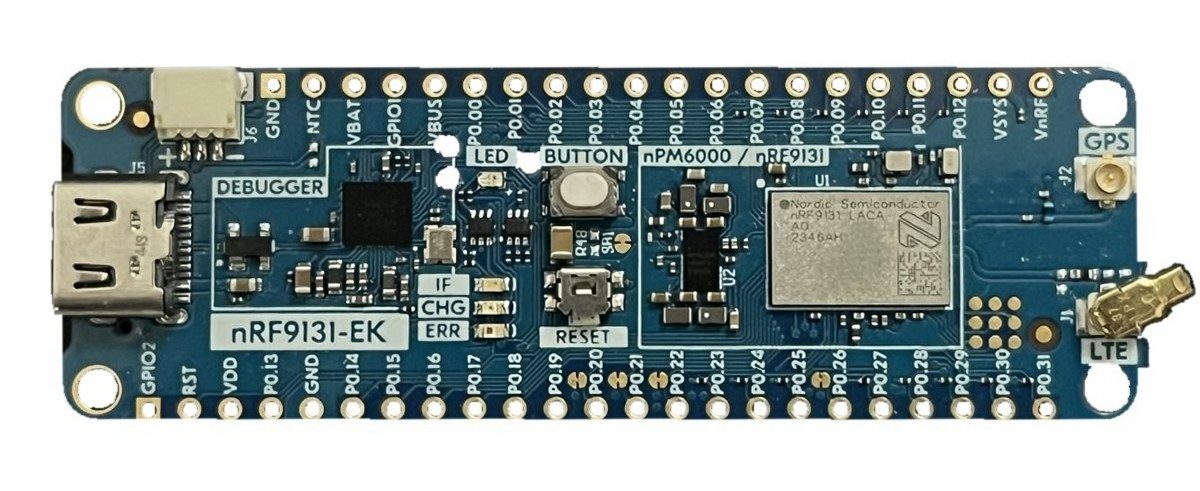
Nordic Semiconductor nRF9131 EK evaluation board
Bench board · 1.9 GHz only

nRF9131 EK kit

A Nordic Semiconductor nRF9131 EK. The nRF9131 runs FLSEMI’s DECT NR+ stack and is running on our bench network today; as on the nRF9151 DK kit, your PC or MCU drives the stack through our UART host interface (HIF-UART). The board’s on-board debugger programs it — no external probe needed.

  • 1.9 GHz only: in the US, Band 9 (1921.5–1928.4 MHz); no 915 MHz
  • The lowest-cost way to put another node on a DECT NR+ network
  • For evaluation and demonstration; for new product designs we work with the nRF9151

US$72 per kit + shippingUS$12 shipping per order within the United States. Order now →

All kits
  • Bands: 1.9 GHz Band 9 (1921.5–1928.4 MHz, North America) and 915 MHz Band 4 (902–928 MHz), selectable on the Thingy:91 X and nRF9151 DK kits; one network runs on one band. Both bands have run on air on the Thingy:91 X and the nRF9151 DK. Throughput and range at 915 MHz are not yet characterised. The nRF9131 EK kit is 1.9 GHz Band 9 only.
  • Shipped in Nordic Semiconductor’s original box — opened by FLSEMI for firmware programming and testing.
  • Host interface: FLSEMI’s compact frame protocol with CRC-16 integrity, over UART at 1 Mbaud or SPI. This is the wired link to your MCU, not the radio data rate.
  • Full-function FLSEMI DECT NR+ firmware for evaluation, not a cut-down demo.
  • Firmware is installed and tested by FLSEMI. It is not offered for download; updates are sent to kit holders on request.
  • Usually ships within two weeks of your order; the ship date depends on the distributors’ stock of the Nordic Semiconductor boards, and we email it to you after you order.
Support by platform

What we support, on which hardware.

The same FLSEMI DECT NR+ stack runs on every platform below. The nRF9131 EK kit is 1.9 GHz only and offered for evaluation; for new product designs we work with the nRF9151. What differs is how you reach it: through our gateway firmware and tools on the Thingy:91 X kit, from your own PC or MCU on the nRF9151 DK kit, or inside your own product.

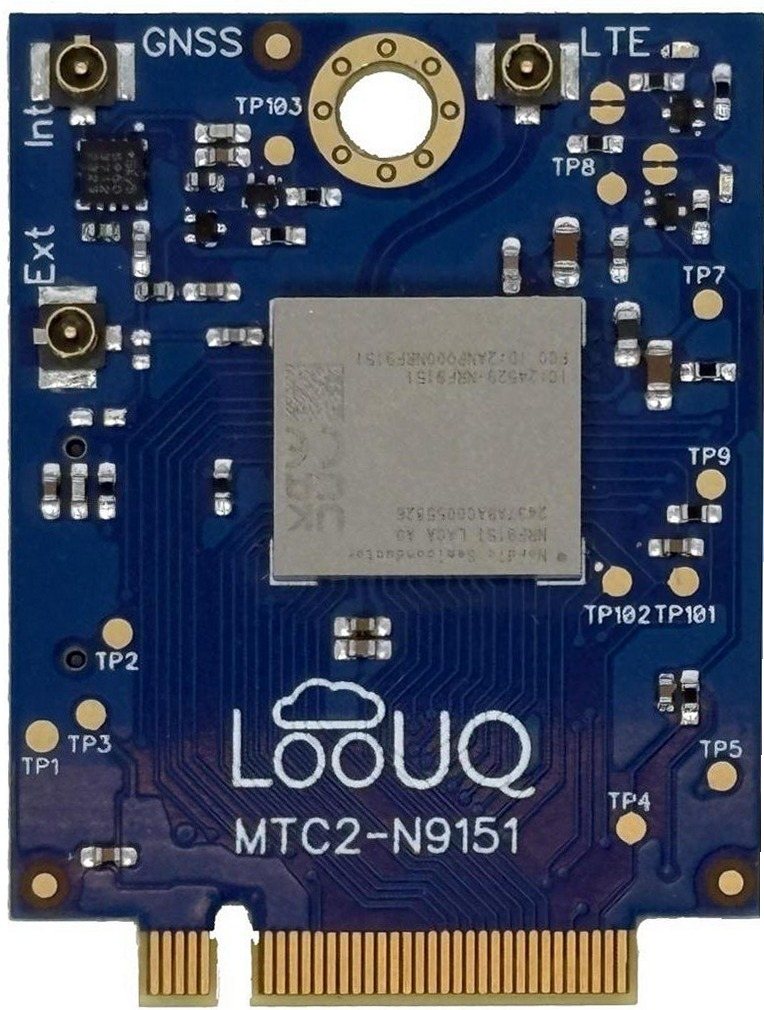
Support areaNordic Semiconductor Thingy:91 XThingy:91 X kitGateway & nodeNordic Semiconductor nRF9151 DKnRF9151 DK kitBench boardNordic Semiconductor nRF9151 SMA DKnRF9151 SMA DK kitBench board · SMANordic Semiconductor nRF9131 EK evaluation boardnRF9131 EK kitBench board · 1.9 GHz onlyLooUQ MTC.2 N9151 embedded modem based on Nordic Semiconductor nRF9151LooUQ MTC.2 N9151Embedded modem
Environment, network & radio configurationWorkstation and tool set-up, the DECT NR+ network (network ID, band and carrier, role, mesh or star, site plan), link security keys and radio settings; on the Thingy:91 X also Wi-Fi and the uplink.✓✓✓✓
Through the host interface (HIF-UART), as on the nRF9151 DK. 1.9 GHz only (no 902–928 MHz); in the US, Band 9
—
Information systems & system integrationGetting the network’s data into your systems: your own ThingsBoard server, its data model and server-side commands, IPv6 and the WireGuard tunnel, health monitoring, backup and restore — and, on the DK, datagrams to and from your host software.✓✓✓✓
Through the host interface (HIF-UART), as on the nRF9151 DK
—
Embedded SDK (C API)FLSEMI’s DECT NR+ stack as a prebuilt library with an embedded C API: you write your own application on the nRF9151 itself, with no host processor. Build a mesh sink, relay or leaf, or a star hub (FT) or member (PT); five ready-made sample applications cover one role each. With a developer guide — not a download; leave your company details to get it. SDK overview (PDF, public)✓
Verified on hardware, all five roles, with link security enabled; needs an SWD debug probe — see below
✓
Verified on the nRF9151 DK, all five roles, with link security enabled
✓
Verified on the nRF9151 DK, all five roles, with link security enabled
✓
Verified on the nRF9131 EK, all five roles, with link security enabled
SUPPORTED (BUILD)
Not yet run on hardware; needs an SWD debug probe — see below
DocumentationThe Getting Started guide and the SDK overview are public. The full setup and integration guide, the command and register reference, the host-interface specification and the C API & SDK documentation: leave your company details in a short form.Getting StartedpublicFull guide & command referenceshort formSDK overviewpublicC API & SDK documentationshort formHost-interface specification & full guideshort formSDK overviewpublicC API & SDK documentationshort formHost-interface specification & full guideshort formSDK overviewpublicC API & SDK documentationshort formHost-interface specificationshort formSDK overviewpublicC API & SDK documentationshort formSDK overviewpublicC API & SDK documentationshort form
Embedded SDK on the Thingy:91 X and the LooUQ MTC.2 N9151 — what it takes
  • An SWD debug probe is required: for example a second nRF9151 DK used as the debugger, or a SEGGER J-Link.
  • Your application replaces the kit’s nRF9151 firmware. The nRF9151’s UART is wired to the nRF5340, so for a console either restore the nRF5340 to Nordic Semiconductor’s USB–UART bridge (Connectivity Bridge), or use an RTT console through the debug probe.
  • While your application runs on the nRF9151, the kit’s own gateway features — DECT NR+ configuration over USB, cloud forwarding and nRF9151 updates over USB — are not available. Reprogramming FLSEMI’s kit images restores them.
  • On the Thingy:91 X the SDK has been run on hardware in all five roles, with link security enabled. Both console options have been run: the nRF5340 restored to Nordic Semiconductor’s Connectivity Bridge (UART over USB), and RTT through the debug probe.
  • On the nRF9131 EK the SDK has been run on hardware in all five roles, with link security enabled. The SDK builds for the LooUQ MTC.2 N9151; on that module it has not yet been run on hardware.
  • LooUQ MTC.2 N9151: program it over SWD with an external debug probe — for example a second nRF9151 DK used as the debugger, or a SEGGER J-Link. The console is the module’s UART, or RTT through the probe.

Supported hardware. The host interface (HIF) and the Embedded SDK are supported only on nRF91-series devices and related products shipped by FLSEMI, or shipped under licence from FLSEMI.

LooUQ MTC.2 N9151: our DECT NR+ stack has been brought up on an earlier revision of this module; the current revision has not yet been re-verified. It is not part of the evaluation-kit offer — see the module or ask us about it. MTC.2 N9151 image courtesy of LooUQ, used with permission. nRF9131 EK: 1.9 GHz only (no 902–928 MHz); in the US, Band 9. Programmed through its on-board debugger, no external probe needed. nRF9131 EK photo: FLSEMI.

Developer resources

Read before you order.

Capability statement

What the kits can do today.

All four kits run the same FLSEMI DECT NR+ stack and join the same network: a Thingy:91 X kit can be the sink that carries every node to your cloud, and nRF9151 DK and nRF9131 EK kits can sit in that network as relays or leaves driven from your PC or MCU. Every capability below is implemented in the current firmware; where something is not yet characterised, we say so.

3 kits, one stackAn enclosed, battery-powered gateway and node, and two bench boards for host integration
Mesh + starSelf-forming multi-hop mesh with relays, or a star with no forwarding
9 radios · 5 hopsOur reference network on our bench: nine radios, five hops deep, Band 9, link security enabled (October 2026)
No FLSEMI cloudYour own ThingsBoard server over IPv6; the kits ship with no cloud connection

The DECT NR+ stack — on every kit

Standard
FLSEMI’s own implementation of ETSI TS 103 636-4 (MAC) and TS 103 636-5 (DLC and Convergence layer), with IPv6 over DECT NR+ per TS 103 874-3. Engineering runs against the ETSI test descriptions of TS 104 047-2 on our bench — not a certified test system.
MAC
Fixed and portable terminations, cluster and network beacons, random access and scheduled data channels, HARQ, link adaptation, transmit power control, hand-off between parents.
Topology
Point-to-point; star with no forwarding; self-forming multi-hop mesh with relays and a sink, routed uplink and downlink. A preferred parent can be set, and the node falls back to any parent if it is lost.
Data
Segmentation and reassembly, retransmission (ARQ), lifetime control, flow control and endpoints at the Convergence layer.
Site configuration
The sink distributes a site plan over the air (TS 103 636-5 Annex C): which nodes relay and on which carrier, each node’s parent, sensor reporting, security policy, IPv6 prefix and service addresses. Every node adopts it hop by hop.
Firmware
Signed images. Mesh-wide update: the sink offers a new image, and each node of the same board type pulls it, installs it and serves its own children.

Security — when enabled

Default
Off. A kit runs unsecured links until you install a network key.
Link security
Mode 1 of TS 103 636-4: AES-CMAC integrity and AES-CTR ciphering from a 128-bit network key; integrity is checked before a PDU is acted on.
Policy
Unsecured associations can be refused; captured unicast traffic is refused if replayed; beacons can be ciphered so that only keyed nodes can read them.
Keys
Write-only on every interface; rotation to a new key without taking the network down; held in the nRF9151’s secure storage, encrypted with the chip’s hardware-unique key.
Scope
Protects the DECT NR+ radio hops. The gateway deciphers; the WireGuard tunnel (Thingy kit) protects only the leg from the gateway to your server. No DTLS. Not encrypted all the way from the device to your server.

Thingy:91 X kit

Roles
Sink (gateway to your PC or cloud), relay or leaf — chosen at commissioning, same image.
Configure
Over USB serial from Windows, macOS or Linux, or over Bluetooth LE in a time-limited window: Wi-Fi, cloud, DECT NR+ network, role, keys, sensors. No app or account. Open-source host tool (BSD-3-Clause) with a local dashboard.
Cloud
Wi-Fi, IPv6, ThingsBoard CoAP device API to your server. Each mesh node becomes its own device, created automatically; server-side commands to the network.
Sensors
Temperature, humidity, pressure, air quality (IAQ, eCO₂, bVOC), attitude and motion, battery and charger state — reported per node.
Bluetooth LE
A configuration window opened on the device (button or USB) that closes by itself; pairing and encryption required. The same configuration commands, a command shell over the Nordic UART Service, and firmware updates of both chips.
Updates
Both chips over USB or Bluetooth LE, no debugger. The nRF5340 test-boots a new image and keeps it only once confirmed; the sink can also hand a new nRF9151 image to the nodes of the mesh over the air.
Indicators
DECT NR+ link LED and air-quality LED; white during firmware updates.

nRF9151 DK and nRF9131 EK kits

Control
The whole stack as a register map: identity, role (hub, member, relay, sink), carrier, security policy, parent preference, topology.
Data path
Send and receive datagrams with a delivery result per datagram — direct, routed to the sink, or routed down to a node; events and an interrupt for pending data.
Visibility
Per-peer link quality, counters for every layer, boot and fault records, routing tables, a production radio test mode.
In a network
Joins Thingy:91 X kits as relay or leaf; its health report (die temperature, supply) reaches the sink’s cloud like any node’s.
Tooling
Reference Python host tool, and register-level documentation for kit holders.
For IT and integration teams
  • IPv6 only (SLAAC); outbound UDP to your ThingsBoard (CoAP) or WireGuard server; no inbound connection; no FLSEMI-hosted cloud.
  • Thingy kit: scriptable, documented configuration over USB or Bluetooth LE, a command shell over USB or Bluetooth (NUS), ThingsBoard telemetry, attributes and server-side commands. DK kit: the HIF-UART register map.
  • Whole-kit settings backup and restore (secrets excluded), a snapshot of who is attached to whom, health counters for the uplink, links and faults.
  • Setup and system integration guide, command and register quick reference, host-interface specification — leave your company details to get them.
What these kits are not — yet
  • Not FCC-authorized end products and not certified DECT NR+; for evaluation by developers and integrators.
  • No throughput or range figures are stated for these kits; 915 MHz is not yet characterised.
  • Bluetooth LE is reachable only inside a window opened on the device, one connection at a time.
  • The CoAP uplink is not encrypted by itself; use the WireGuard tunnel.
  • Link security is off until you install a key; keys are installed per node, not sent over the air.
  • Firmware is not offered for download; updates go to kit holders on request.
  • No GNSS while DECT NR+ runs: node positions are what you enter.
  • Battery runtime and temperature range are not yet characterised.
Your DECT NR+ productPort the stack to your nRF9151 hardware, or run it as module firmware under your host MCU.
IntegrationGateway, cloud and host-interface integration with your software; site plans and commissioning for a pilot.
PilotsA complete DECT NR+ network — nodes, relays, sink and cloud — evaluated on your own site.
Capability statement (PDF) ↓ Getting Started guide (PDF) ↓ SDK overview (PDF) ↓ Engineering services Capability statement: 2 pages, R08 · Getting Started & Integration Overview (Thingy:91 X kit): 10 pages, public edition 1.2 · Embedded SDK overview: 2 pages, public edition 1.6 · October 2026
Regulatory

Evaluation kit for developers — not an FCC-authorized end product.

These kits are built on Nordic Semiconductor’s FCC-certified nRF9151 SiP. That FCC authorization covers the nRF9151’s cellular function and does not extend to DECT NR+ operation, so each kit is an evaluation kit: its board is marked “For evaluation only; not FCC approved for resale.”

Under the FCC rules for evaluation kits (47 CFR §2.803), they are supplied only to product developers, software developers and system integrators who are evaluating them, and they are not for resale or for use in a deployed product or service.

Thingy:91 X, nRF9151 DK and nRF9131 EK are products of Nordic Semiconductor ASA, bought by FLSEMI through regular distribution. This is not a certified DECT NR+ stack: FLSEMI is an early-stage company, and the firmware has not yet been through DECT NR+ certification or formal conformance testing. This offer is FLSEMI’s own. Product photos: Nordic Semiconductor. ThingsBoard is a trademark of its owner.

Order online

Order a kit.

Pay by card or PayPal on PayPal’s own page; FLSEMI never sees your card number. Choose the quantity there.

  • United States only. We ship only to addresses in the United States; a payment for any other destination is refunded in full.
  • Shipping US$12 per order, within the United States. Florida addresses also pay Florida sales tax.
  • Usually ships within two weeks. We program and test each kit after you order it, and the boards come from Nordic Semiconductor’s US distributors, so the ship date depends on their stock. We email you the expected ship date after you order. If we cannot meet it, you can cancel for a full refund.
  • For developers. These are evaluation kits, not FCC-authorized end products, sold only to product developers, software developers and system integrators.

Plus US$12 shipping per order, and Florida sales tax for Florida addresses. Each kit type is a separate PayPal payment; ordering two types means two payments and shipping on each, so for a mixed order contact us for one invoice. Need an invoice instead of a card payment, or a question answered first? Contact us.