
Battery-free Bluetooth sensors for rooms, a DECT NR+ node for sites beyond cable, and a VOx thermal core for imaging — each one reports into the same EdgeRouter network. The Bluetooth sensors are received by the BFi53ER0-BF gateway.
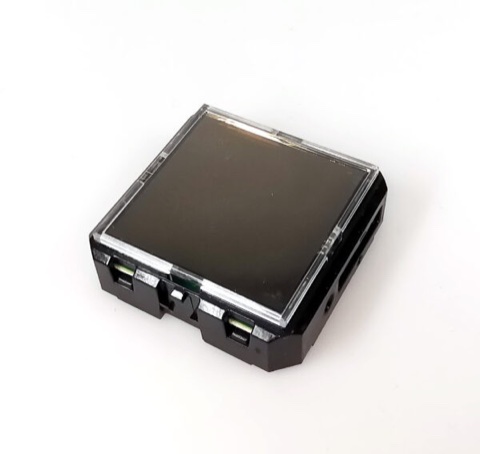
Temperature, humidity, light, acceleration and a door or window contact, powered by room light.
Specifications →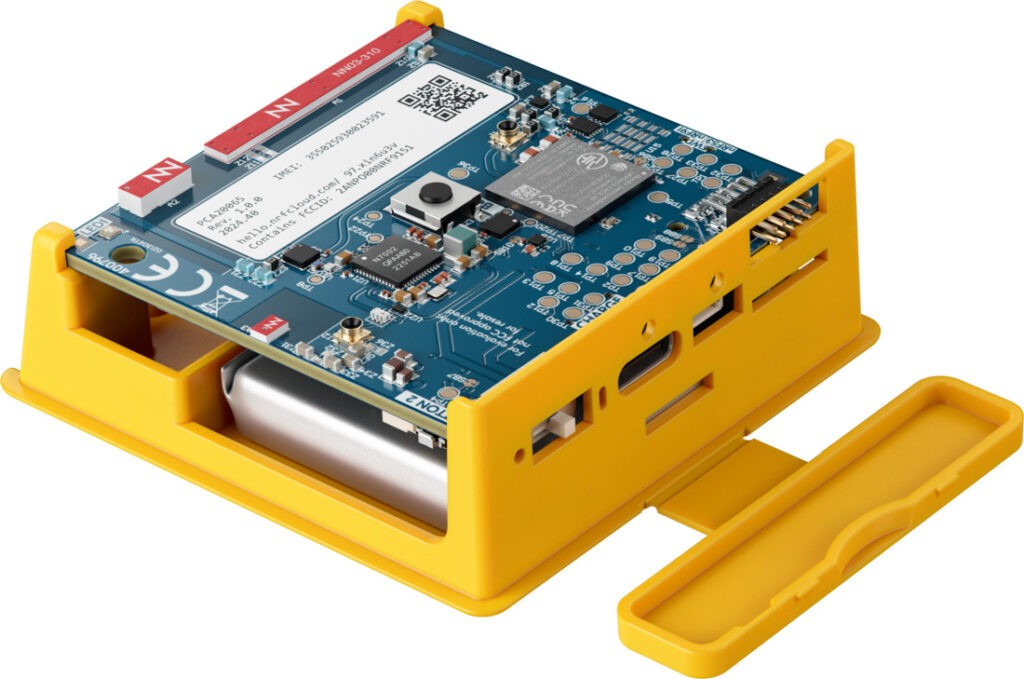
Air quality, temperature, humidity, pressure and motion on a node that relays for itself.
Details below →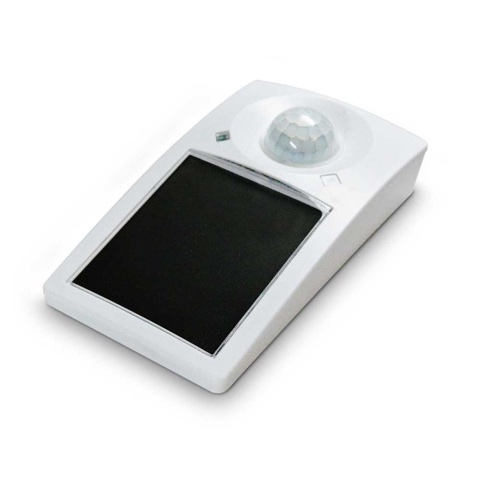
Ceiling PIR presence and a calibrated light level — no camera, no microphone.
Specifications →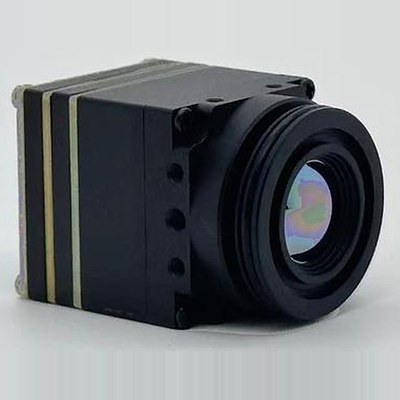
640×512 thermal imaging with UVC video and CDC control over one USB connection. Export-controlled.
VOx thermal imaging →STM 550B and EMDCB are EnOcean GmbH products. EnOcean is a trademark of EnOcean GmbH.
Environmental and motion sensors on a DECT NR+ node that forms its own multi-hop mesh: no SIM, no base station, no subscription. Nordic Semiconductor nRF9151 + nRF5340, running FLSEMI’s own stack to ETSI TS 103 636 Release 2. 58.8 × 58.5 × 19.7 mm, USB-C, battery or solar ready.
Evaluation and development hardware, not a finished product. The BFi91XTD carries no DECT NR+ regulatory authorisation of its own (the FCC ID on the Nordic Semiconductor hardware covers the nRF9151’s cellular function only), so it is not for resale or commercial deployment. A shippable version — enclosure, antenna, band and certification for your market — is a project we run with you. How an engagement runs →
Point-to-point, star and multi-hop mesh with route-cost selection; a depth-5 tree of nine radios verified on our bench, every pair delivering both ways; the shipped firmware routes up to depth 6 by default (design limit, configurable to 15). Clause 5.7 hand-off between gateways in 24–33 ms with the source link held.
Sink, relay and leaf run the same firmware; the role is set at run time, so any spare replaces any node. Configuration and updates over USB or Bluetooth LE, no enclosure opening.
AES-CTR ciphering with CMAC integrity at MAC and CVG, once the network is keyed and security is required; Arm TrustZone and CryptoCell. Listen-before-talk and automatic channel re-selection that carries the whole cluster.
Environmental, motion and magnetic sensors, read by the on-board driver and reported as a fixed 33-byte record on air — polled, or pushed on the node’s own clock — and rendered as JSON at the gateway.
Temperature, humidity, pressure, air quality (IAQ), CO₂ and VOC in one sensor.
3-axis accelerometer on board for wake-on-motion. Reporting today is polled or periodic; motion as a report trigger is on the roadmap, not in the shipped image.
Gyroscope + accelerometer for orientation, vibration and movement analysis.
Heading and magnetic-field sensing for orientation and presence detection.
Battery and supply voltage travel in the node’s own report over the mesh. Current, charge state and PMIC temperature are read locally at the gateway.
System-level watchdog, boot-failure recovery and an intelligent power-down alert.
| Wireless | DECT NR+ (ETSI TS 103 636, Release 2) · CP-OFDM · TDMA / FDMA · TDD · BCH / PCH paging, RACH / DCH data |
|---|---|
| Bands | 1.9 GHz — Band 1 (Europe) and Band 9 (North America) — and 915 MHz (Band 4) from the same image, chosen at start-up; all air-verified for association, secured association and data. Throughput and range at 915 MHz are not yet characterised. |
| Range | We do not publish a range figure. One measured point: 230 m from a 36 m mast at +13 dBm, MCS 0, through urban clutter. Size a site against the link budget. |
| Interference | Listen-before-talk with last-minute scan, backoff on collision, automatic channel re-selection verified for an announced change. Uninterrupted continuity under interference is still being validated and is not claimed. |
| Compute | Nordic Semiconductor nRF9151 SiP + nRF5340 SoC (Arm Cortex-M33) |
| Reading a node | USB Type-C or Bluetooth LE (configuration, firmware, shell), or over the mesh as a 33-byte report at the gateway |
| To your systems | Via a gateway: Modbus TCP to a BMS, or CoAP over IPv6 to the cloud. Or put the radio behind your own MCU through the stack’s host interface (UART 1 Mbaud or SPI). |
| Power & size | USB Type-C · battery fuel gauge · battery / solar ready · 58.8 × 58.5 × 19.7 mm |
| Standards | MAC / DLC / CVG to TS 103 636 V2.2.1, developed in-house; Access Profile 2 (TS 103 874-2 V2.1.1) as an option. Test functions for a laboratory per TS 104 047; this is not a claim of passed certification. |
| Certification | Applied for per project (NCC / CE / FCC / TELEC / RCM), by market and production version; the core radio module carries Nordic Semiconductor’s own certification base. |
On a device-ID address or broadcast query, the node reads its sensors and reports over DECT NR+ as a fixed 33-byte record on a dedicated CVG endpoint — polled, or pushed on its own clock — and the gateway renders it as JSON. Reports relay through intermediate nodes when needed and arrive at a gateway for onward integration.
Two gateways are in service. The BFi53ER0S EdgeRouter takes the mesh out as Modbus TCP to a BMS. A Nordic Semiconductor Thingy:91 X gateway takes it out over Wi-Fi as CoAP over IPv6 to a cloud platform — which is how the running site reports: one sink, eight nodes, a fresh reading from every node every ten seconds — the sensor-carrying nodes reporting air quality, the rest reporting link and power health.
Self-forming, multi-hop environmental and motion sensing on DECT NR+ — licence-exempt, no SIM, no subscription. Ordered as evaluation and development hardware; a deployable product version is scoped per project.
Part numbers & pricing → Talk to an engineer Back to FLSEMI