
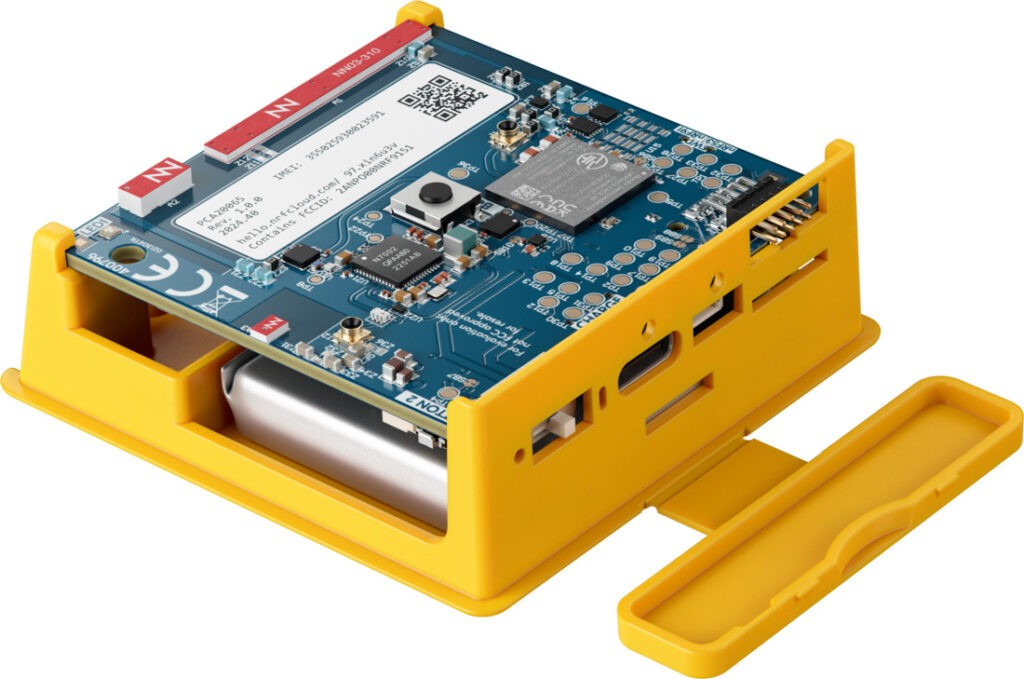
A group walkie-talkie and group text messages across a multi-hop DECT NR+ mesh, and private one-to-one calls — for groups on mountain trails, ski tours, in tunnels and underground works, and teams spread across factories, hospitals, care homes, cruise ships and construction sites, on licence-exempt spectrum, with no cellular coverage, no SIM, no base station and no IT administrator. The network is the units themselves: BFi91XTD radios on the Nordic Semiconductor Thingy:91 X, each paired with one person’s app over Bluetooth LE.
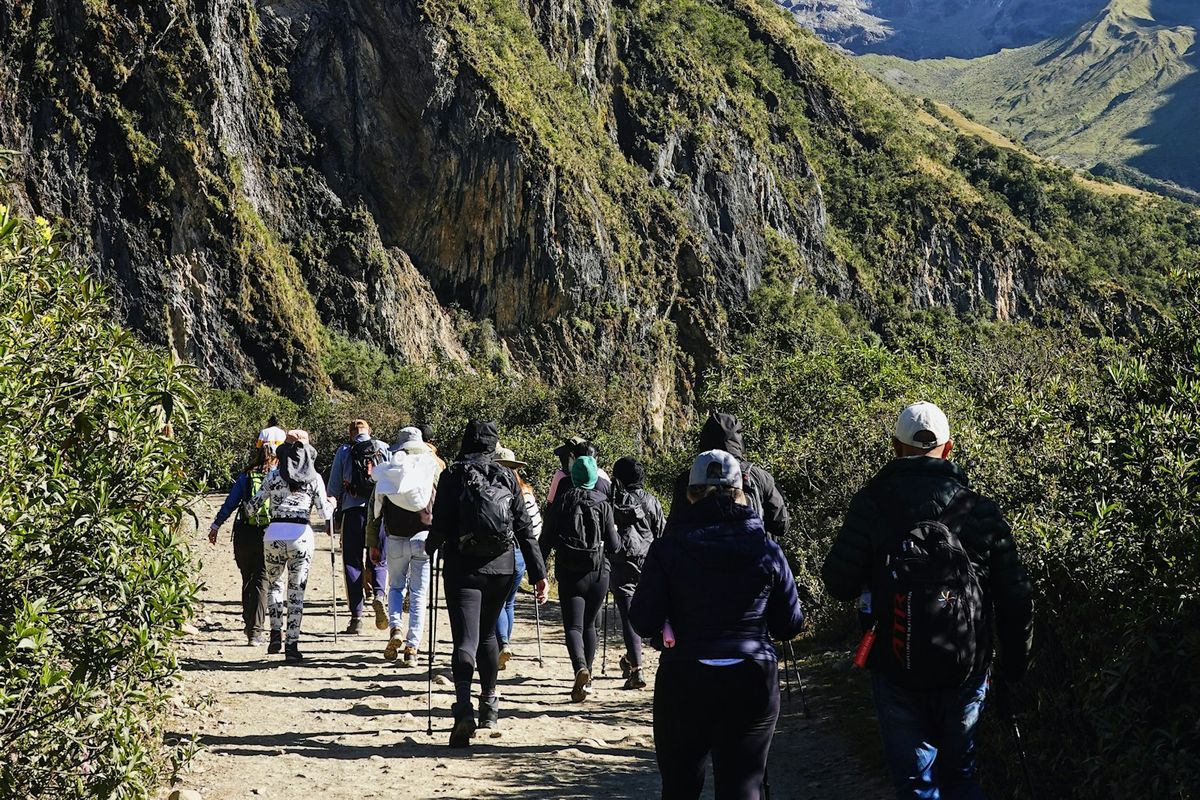
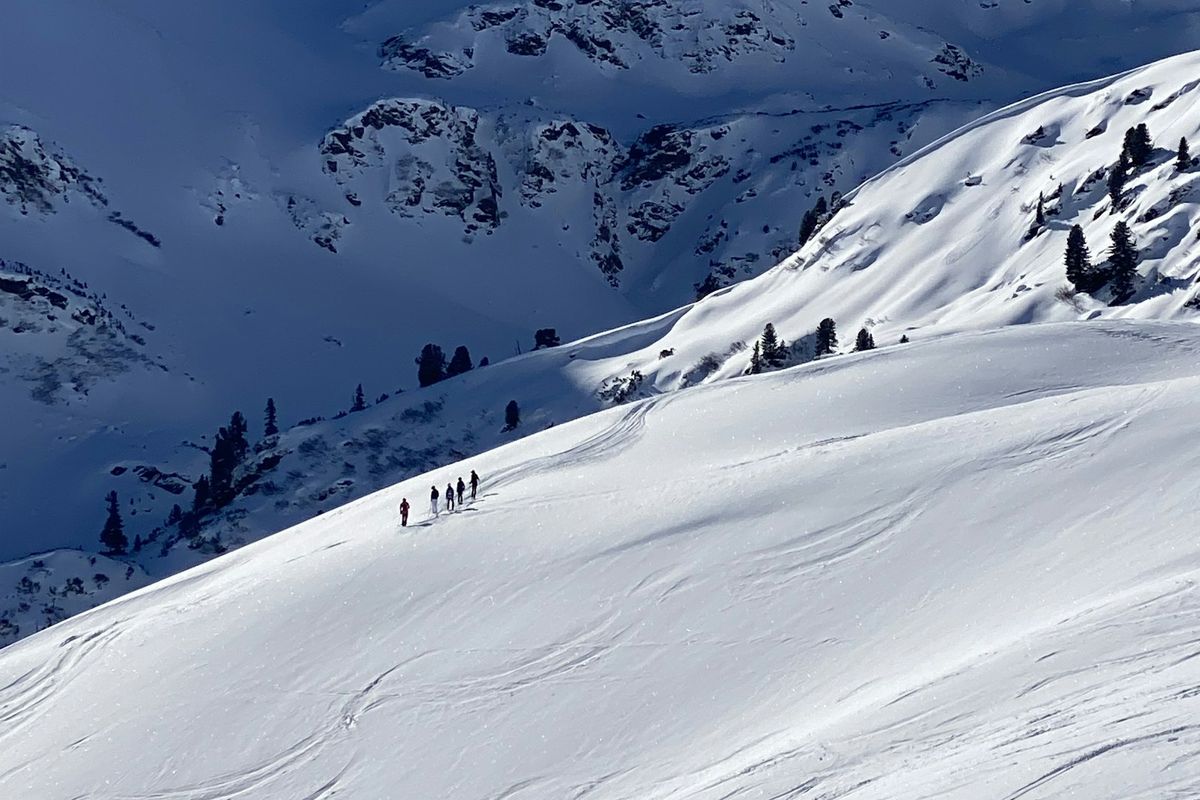
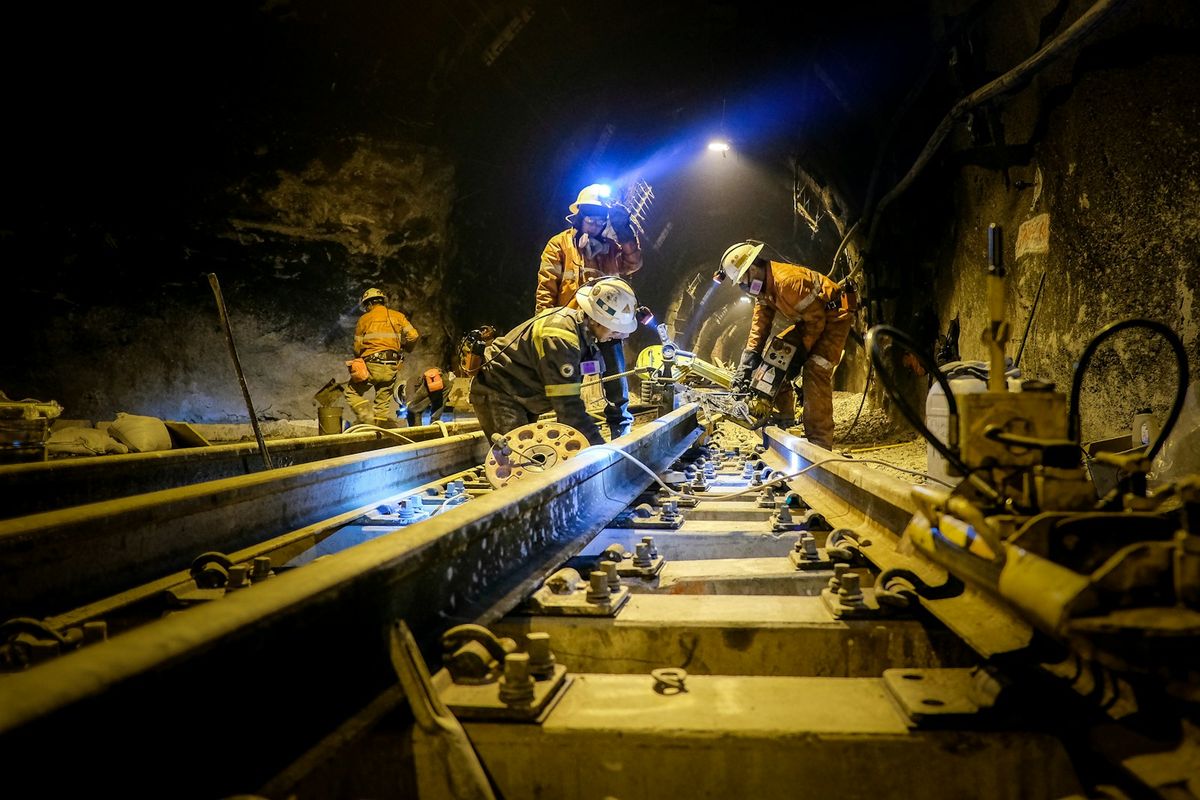



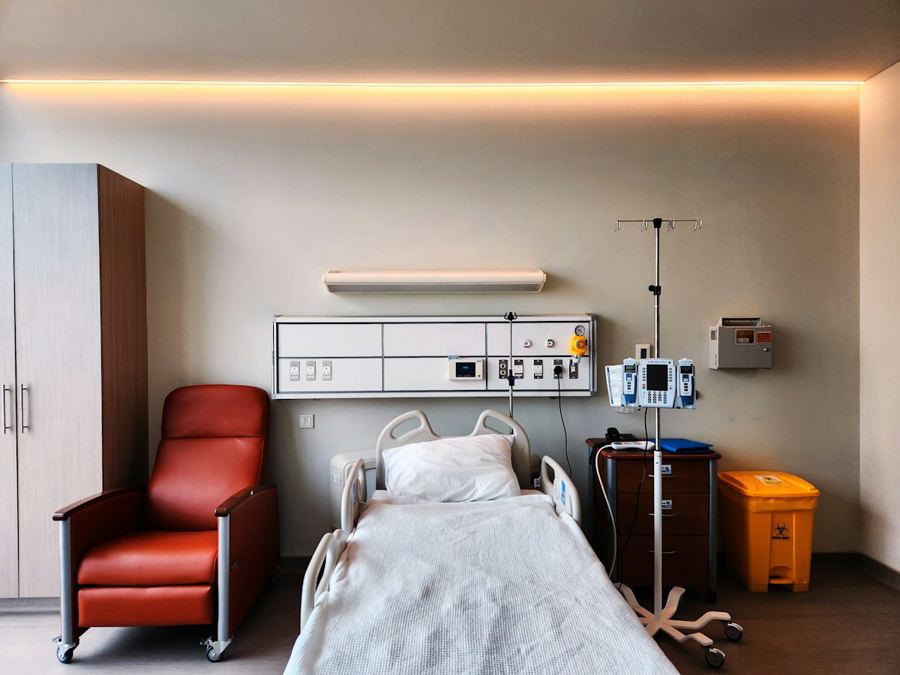

Built for small groups who need to stay in touch where phones have no signal: hikers and ski parties, tunnel and underground crews, and teams across factories, hospitals, care homes, ships and construction sites.
Hold to talk, release to listen. One person has the floor at a time; anyone else pressing sees who is talking. Voice crosses the multi-hop mesh to every member of the group.
Two members step out of the mesh into their own one-to-one DECT NR+ link, talk, and both units return to the mesh automatically when the call ends.
Text and data between members across the mesh, and “who is here” for the whole network — check who is still with the group without a voice call.
Join by scanning the group’s QR code and pressing the unit’s button. The group key lives only in the members’ apps; the leader re-keys to shut out a lost device.
Each person’s app records and plays the audio and encrypts it. The BFi91XTD units relay the encrypted frames over DECT NR+ — implemented with reference to the ETSI DECT NR+ specifications (TS 103 636) — and never decode them.
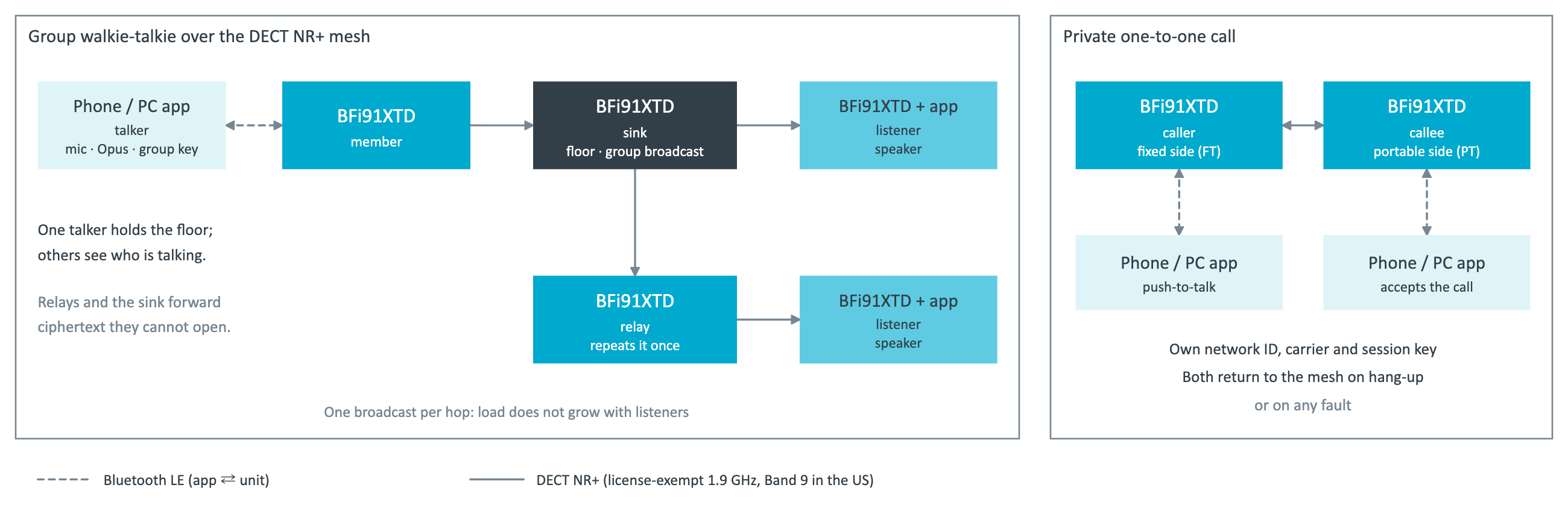
The group voice key exists only in the members’ apps, never in the radio units. Relays and the sink forward ciphertext. AES-128 (CTR with CMAC), the same primitive ETSI TS 103 636-5 uses for its convergence-layer security.
Every DECT NR+ hop is encrypted as well. Call invitations are sealed under the group key, so no session key crosses the mesh in the clear.
Its owner. Pairing works like a Bluetooth speaker — press to pair, hold to forget — and one person uses one unit at a time.
| What | Result | Notes |
|---|---|---|
| Group walkie-talkie | median 146 ms, 95th percentile 247 ms | 154 frames; none lost except the empty end-of-talk frame |
| One-to-one call | median 145 ms, 95th percentile 254 ms | 3 of 458 frames concealed |
| Group, encrypted in the app | 0.9–4.8 % of frames lost; median 155–204 ms | measured runs |
| Group, encrypted in the app, 8-hour run | 0–2.2 % of frames lost; median 129–149 ms | 6 runs during an 8-hour bench run: nine radios, five hops |
| Call set-up | about 7 s from accept to talking | both radios switch networks |
| Voice bit rate | 12 kbit/s per talker | Opus, an open, royalty-free codec |
Conditions: our nine-radio bench network, Band 9 (1.9 GHz, US); the phone side played by a Mac over Bluetooth LE with a real microphone; Opus at 12 kbit/s in 40 ms frames; latency from send on the microphone side to arrival on the speaker side, both Bluetooth links included. Tested with up to three voice endpoints on a nine-radio network; larger groups are not yet measured.
The same excerpt, as the talker spoke it and as the listener received it over DECT NR+, in a group walkie-talkie and in a one-to-one call. Unedited apart from trimming each received clip to the input’s length; no gain change.
Conditions: our bench network, Band 9 (US), one hop (the talker’s unit and the listener’s unit); a Mac over Bluetooth LE as the phone at both ends; Opus at 12 kbit/s in 40 ms frames; latency from the talker’s send to the frame arriving at the listener’s Mac. Speech: public-domain LibriVox recordings: Confucian Analects (tr. James Legge), read by Jing Li; Lun Yu (read in Chinese), read by Huang Hsin-Yu.
Nordic Semiconductor and Thingy:91 X are trademarks of Nordic Semiconductor ASA. Bluetooth is a trademark of Bluetooth SIG, Inc. Opus is an open audio codec standardised by the IETF. Photos: Unsplash (Agnes Lee, Kate Banar, RIO MONE, Siwawut Phoophinyo, Sam, Fons Heijnsbroek, and others).
Group voice is offered as custom engineering on our DECT NR+ stack: your users, your terrain, your app or ours. Tell us how many people, what the ground looks like and what they use today.